When Milton Keynes was designated a new town on 23 January 1967, few could have predicted that within two years it would become home to one of the most revolutionary educational institutions in British history. The Open University received its Royal Charter on 23 April 1969, establishing a "university without walls" that would fundamentally transform access to higher education.
The Vision of Open Access
The Open University emerged from the political vision of Prime Minister Harold Wilson and his Minister of State for Education, Jennie Lee. Planning had begun in 1965, driven by a radical principle: enrolment should be open to everyone, irrespective of educational qualifications. As Jennie Lee stated, "no formal entrance requirement should be imposed." This represented a decisive break from traditional universities that demanded A-levels and other prerequisites.
The first students enrolled in January 1971. Initially, teaching relied upon BBC television and radio broadcasts transmitted from Alexandra Palace in north London. These broadcasts continued until 15 December 2006, by which time the university had pioneered the transition to online learning. The "University of the Air" concept, as it was originally known, reached students in their homes across the nation and, eventually, around the world.
Walton Hall: A Campus With History
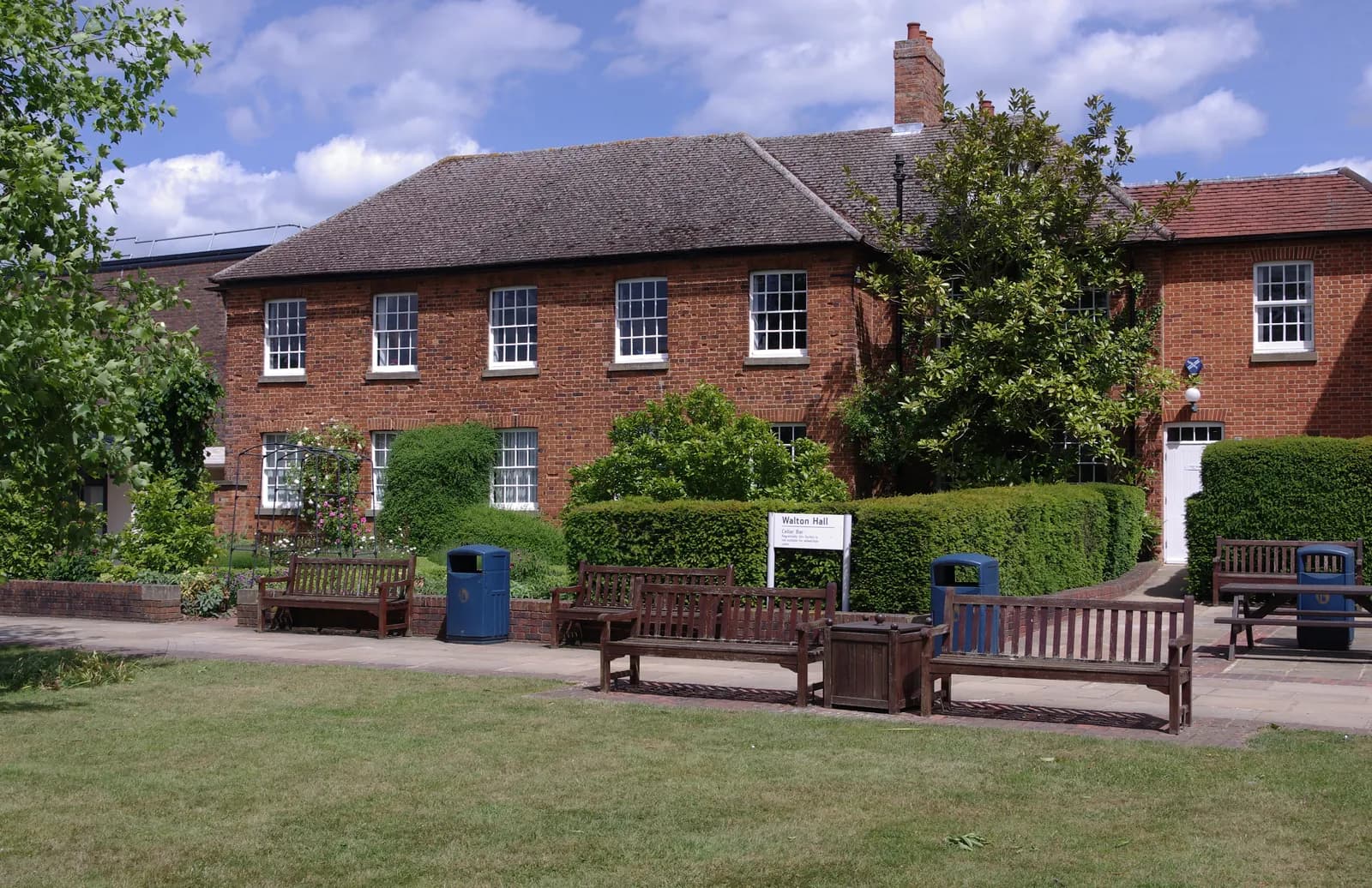
The Open University's main campus occupies Walton Hall, a Regency manor built in 1830 for the Pinfold family. The site spans 45 hectares (110 acres) in the civil parish of Walton, which recorded a population of 12,100 in 2021. The historic hall now houses the Vice-Chancellor's offices, creating a striking contrast between nineteenth-century architecture and a thoroughly modern educational mission.
The university maintains a substantial presence in Milton Keynes. It employs nearly 5,000 associate lecturers alongside 1,427 salaried academic staff, 2,502 academic-related employees, and 1,905 support staff. This makes the institution a significant employer within the city and a cornerstone of its knowledge economy.
Scale and Achievement
The Open University stands as the largest university in the United Kingdom by student number. In 2023, it enrolled 199,391 students, comprising 139,117 undergraduates and 10,103 postgraduates. Overseas students numbered more than 8,599. Since its foundation, over 2.3 million students have passed through its virtual doors.
The institution's graduates have achieved remarkable success. The university produces more chief executives than any other UK higher education institution. Notable alumni include former Prime Minister Gordon Brown, astrophysicist Jocelyn Bell Burnell, musician Joan Armatrading, comedian Lenny Henry, politician John Reid, author Ian Rankin, television presenter Holly Willoughby, and baker Nadiya Hussain.
Honorary graduates include figures of national and international distinction: David Attenborough, Sir Tim Berners-Lee, Mary Beard, Professor Brian Cox, Richard Dawkins, and Sir Terry Pratchett. The university holds triple accreditation and is one of only two UK institutions accredited in the United States by the Middle States Commission.
Continuing Innovation
The Open University has maintained its pioneering spirit into the digital age. In October 2006, it launched OpenLearn, releasing free learning materials under Creative Commons licences. December 2012 saw the launch of FutureLearn, now the United Kingdom's largest provider of free online courses.
The current Chancellor is Baroness Lane-Fox of Soho (Martha Lane Fox), while Professor David Phoenix serves as Vice-Chancellor. The university celebrated its fiftieth anniversary in 2019, a milestone that prompted reflection upon its transformative impact upon British education.
A Legacy in Milton Keynes
The connection between The Open University and Milton Keynes extends beyond geography. A statue of Jennie Lee stands at Milton Keynes Central station, commemorating her role in establishing the institution. The Jennie Lee Building on the Walton Hall campus also bears her name. When Milton Keynes received city status in August 2022, The Open University formed part of the civic identity that distinguished the new city.
The symbiotic growth of Milton Keynes and The Open University tells a distinctively British story of post-war ambition. The new town provided space for a new kind of university; the university, in turn, helped establish Milton Keynes as a centre of innovation and opportunity. Over five decades later, that partnership continues to deliver education to students who might otherwise never have entered a lecture hall.