Derek Walker shaped the physical and philosophical foundations of Milton Keynes during its formative years as Chief Architect and Planning Officer. His vision of a "forest city" merged English landscape traditions with modern urban planning to create one of Britain's most distinctive new towns.
From Lancashire to the New City
Derek John Walker was born on 15 June 1929 in Blackburn, Lancashire, into a family with deep artistic roots; his great-grandfather co-founded the Hallé Orchestra. He studied architecture at Leeds Art School, where he qualified with distinction, before completing postgraduate studies in planning at the University of Pennsylvania. There, he encountered the work of Louis Kahn and Frank Lloyd Wright, influences that would later inform his approach to Milton Keynes.
Walker established his own architectural practice in Leeds in 1960. A decade later, in 1970, he was appointed Chief Architect and Planning Officer for the Milton Keynes Development Corporation (MKDC), a position he held until 1976.
The Interview That Changed Everything
When Walker sat before the interview panel for the MKDC role, he was asked what he would do with Milton Keynes. His response was characteristically direct: "Make it a darn sight prettier than it is now." The panel also asked what the new city would look like. Walker replied that it would be "greener than the landscape around it." This concept of a "forest city" became the guiding principle of his work.
Walker recruited and led a 200-strong design team, producing landscaping strategies and designing eleven village plans. He established a programme targeting 3,000 houses per year, complete with supporting community, leisure, retail, sporting, and cultural facilities.
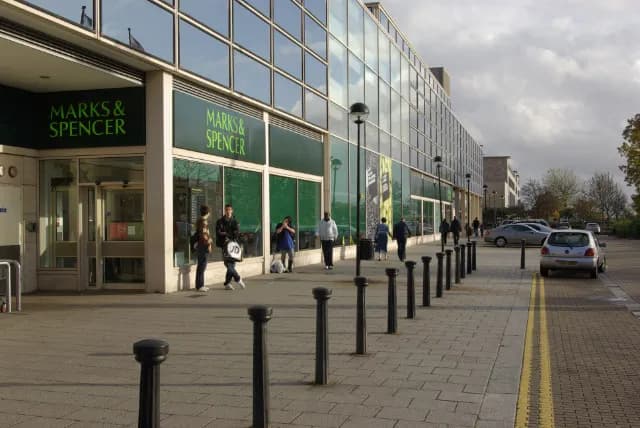
Central Milton Keynes Shopping Centre
The Central Milton Keynes Shopping Centre, which opened on 25 September 1979 with Prime Minister Margaret Thatcher performing the ceremony, stands as perhaps Walker's most visible legacy. The building, which Walker designed alongside Stuart Mosscrop and Christopher Woodward with engineers Felix Samuely and Partners, stretches 700 metres and encompasses 1.79 million square feet of floor area.
The design drew inspiration from Ludwig Mies van der Rohe, and Walker himself likened it to the Crystal Palace. Its innovative features included roof-top service roads that keep delivery traffic out of sight of shoppers. The building received Grade II listed status in July 2010, with the 20th Century Society describing it as "the heart of Milton Keynes, and a building of international importance."
Campbell Park and the Landscape Vision
Walker's work extended well beyond buildings. Campbell Park, which he designed with Stuart Mosscrop and Andrew Mahaddie between 1973 and 1975, covers 46 hectares and functions as both city park and sculpture park. Architectural historian Nikolaus Pevsner described it as "the largest and most imaginative park to have been laid out in Britain in the 20th century." The park received Grade II listing on the National Register of Historic Parks and Gardens in August 2020.
By 1973, two million trees had been planted across Milton Keynes, alongside 180 miles of "redways" providing dedicated routes for pedestrians, cyclists, and horse riders. A fifth of the city's total area was allocated to open green space.
The Grid and the Solstice
Walker developed what he termed a "tightened grid" system, with grid roads spaced at roughly one-kilometre intervals. Stuart Mosscrop noticed that this grid aligned almost precisely with the rising sun on the summer solstice; the team nudged the alignment into exact position. Midsummer Boulevard now points directly at the solstice sunrise, a modern urban feature that connects the new city to ancient British landscape traditions. The design team once sat on a muddy field at dawn to verify the alignment.
Walker credited Melvin M. Webber, a Berkeley professor whose concept of "community without propinquity" enabled by telecommunications influenced the grid system, as the "father of the city."
Culture and Collaboration
Walker's tenure at MKDC was marked by an unusual creative culture. He commissioned work from the most talented young architects of the era, including Archigram, Norman Foster, Terry Farrell, Dixon Jones, and Nicholas Grimshaw. Presentations to the design team sometimes took place late at night accompanied by Pink Floyd soundtracks. On one occasion, Walker invited Buckminster Fuller to deliver a talk in a local pub; the lecture lasted six hours.
Walker later described this period as "very kinky" times, reflecting both the psychedelic influences and the idealism that characterised the project. Most of his team were under 40, novices who became experts as they built the city.
Philosophy and Legacy
Walker described his true legacy as "the greatest British landscaping project of the 20th century just in terms of scale." His planning guidelines established that no building should rise higher than the tallest trees, with a maximum of six stories for commercial buildings in the centre and three stories for residential properties elsewhere.
His approach fused deep traditions of English landscape design, referencing Capability Brown and the picturesque movement, with American urbanism and burgeoning consumer culture. He had studied Disneyland and Frank Lloyd Wright's Broadacre City concept, integrating these influences into a uniquely British context.
Walker remained proud of Milton Keynes throughout his life, expressing happiness that residents expressed such love for their town. He died on 11 May 2015 at the age of 85. The city he dreamed into existence continues to grow, its grid roads, forest plantings, and distinctive shopping centre standing as testament to his vision of a city greener than the landscape around it.
